
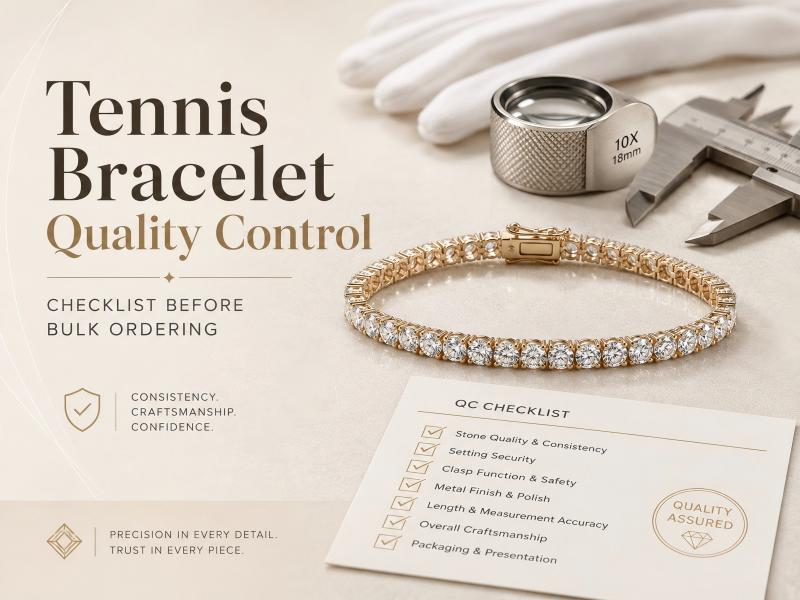
Tennis bracelets have a clean and classic design, but their quality is not as simple as it looks. A bracelet may look beautiful in photos, yet still have loose stones, weak clasp tension, stiff links, uneven plating, scratches, tarnish marks, or inconsistent sizing in bulk production.
For jewelry brands, tennis bracelet quality control should happen before bulk ordering. A sample should become the production reference for secure stone settings, clasp safety, bracelet flexibility, metal finish, size consistency, packaging, and final shipment quality.
Why Tennis Bracelet Quality Control Matters
A tennis bracelet is worn on the wrist, where it moves frequently during daily wear. Because the design includes a continuous line of stones, small settings, flexible links, and a clasp, even one weak point can affect the whole bracelet.
Loose stones, missing stones, weak clasp locks, stiff links, uneven color, scratches, and poor packaging can lead to returns, negative reviews, and lower repeat orders. For brands, quality control is not only about product appearance. It is about protecting customer experience and bulk order stability.
Start with Sample Inspection Before Mass Production
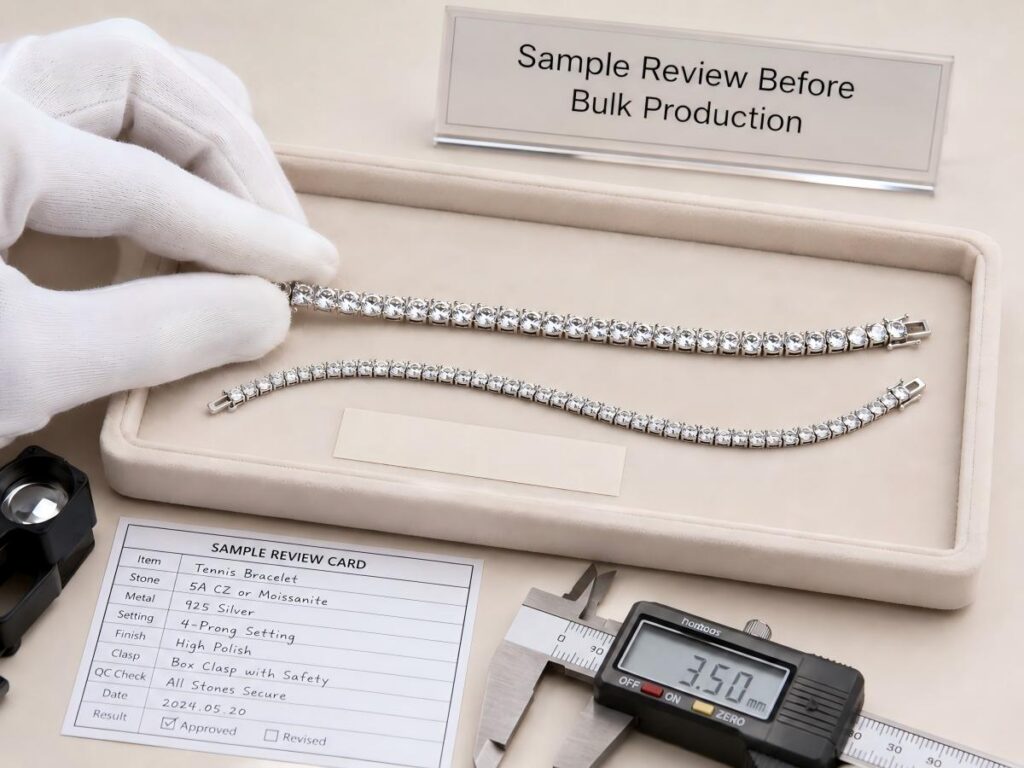
Before placing a bulk order, review a physical sample whenever possible. Photos and videos can show the bracelet design, but they cannot fully show clasp tension, wrist comfort, stone security, bracelet weight, or surface quality.
A tennis bracelet sample should confirm total length, bracelet width, stone size, stone shape, stone type, setting style, clasp type, metal color, surface finish, flexibility, logo details, packaging, and overall hand feel. For first-time OEM buyers, reducing production risk starts before mass production. You can also read our guide on reducing the risk of your first jewelry OEM order before confirming samples and bulk production.
Use the Approved Sample as the Production Standard
Once the sample is approved, the supplier should follow the same standard during bulk production. This helps avoid the common problem where the sample looks good, but the bulk order arrives with different color, different clasp tension, lower stone setting quality, or inconsistent size.
Brands should keep photos, videos, measurements, color notes, clasp details, and packaging requirements as the approved reference.
Stone Options for Fashion Tennis Jewelry
Fashion tennis jewelry does not always need to use diamonds. Many brands choose 5A cubic zirconia, CZ stones, moissanite, or colored gemstones because they offer bright sparkle, clean appearance, and a more flexible price range for wholesale collections.
The stone option depends on the brand’s market positioning, retail price, target customer, and expected quality level. If your customers are still learning this category, you can also read our guide on what tennis jewelry is.
Fashion Tennis Jewelry Needs a Practical QC Standard
Many online guides focus on diamond tennis bracelets, carat weight, diamond quality, natural diamonds, lab grown diamonds, real diamonds, or real diamond certification. These details are important for fine jewelry, but fashion jewelry brands usually need a more practical QC standard.
For tennis jewelry made with 5A cubic zirconia, moissanite, or other stones, the key focus should be stable craftsmanship, secure settings, consistent sparkle, comfortable wear, and reliable bulk order quality. Instead of judging only by stone value, brands should check how the bracelet performs in real production and daily wear.
What Diamond Tennis Bracelet Guides Usually Check
Diamond tennis bracelet guides often focus on total carat weight, diamond clarity, color grade, cut, near colorless diamonds, and certification from GIA or IGI. They may also compare yellow gold, white gold, rose gold, platinum, or 14K and 18K gold settings.
These standards are useful for fine jewelry buyers, but they do not fully solve the quality risks of fashion tennis jewelry. For brands buying 5A CZ, moissanite, or other stones in bulk, the practical question is whether the bracelet has secure settings, consistent stone match, smooth craftsmanship, durable metal finish, and comfortable wear.
| Fine Jewelry Focus | Fashion Tennis Jewelry QC Focus |
|---|---|
| Natural diamonds or lab grown diamonds | 5A CZ, moissanite, or selected stones |
| Total carat weight | Stone size, shape, and batch consistency |
| Diamond clarity and color | Brightness, sparkle, and stone match |
| GIA or IGI certification | Production QC and approved sample matching |
| Yellow gold, white gold, rose gold, or platinum | Gold tone, silver tone, rose gold tone, or other metal finish |
| Diamond value | Wearability, durability, and bulk order stability |
Check Stone Quality and Match
Whether the bracelet uses 5A CZ, moissanite, synthetic stones, or another stone option, the quality control standard should remain strict. Stones should match in shape, size, brightness, and color.
If one section looks darker, duller, cloudy, or uneven, the bracelet may look less refined, especially in online product photos and videos.
Check Stone Setting and Stone Security
Stone setting is one of the most important parts of tennis bracelet quality control. The visual value of a tennis bracelet comes from a clean and continuous line of individually set stones.
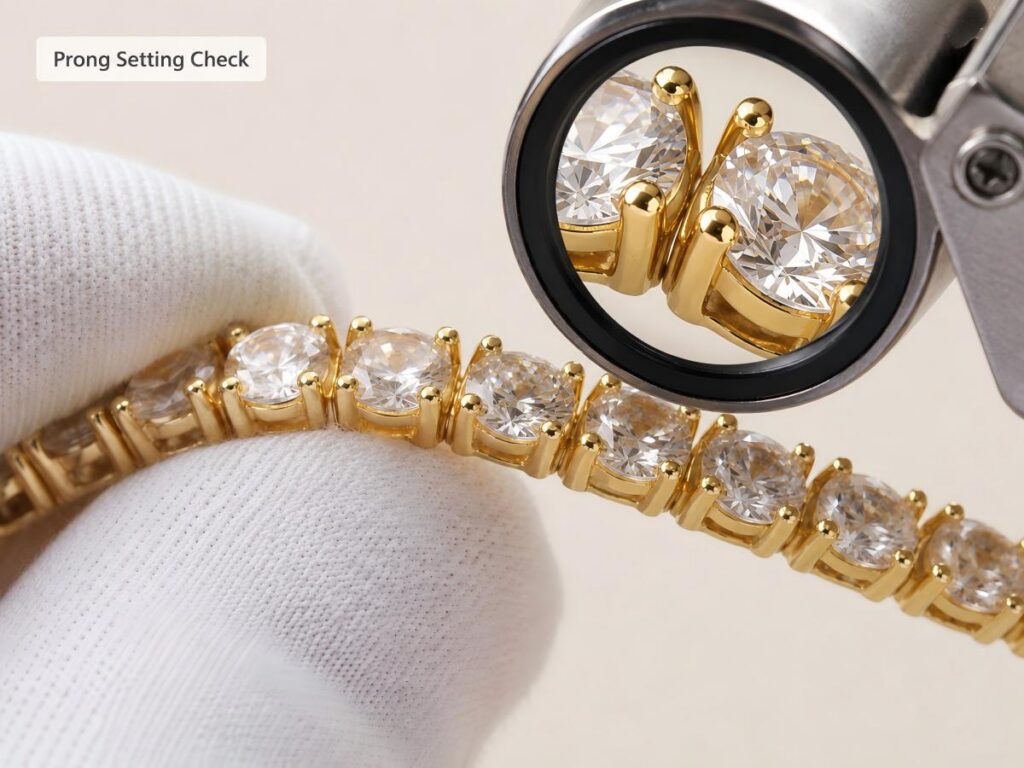
Each stone should sit evenly in its setting, with no obvious gap between the stone and the metal. The stones should not move when touched gently. The height, spacing, and shine should look consistent from one end of the bracelet to the other.
Manufacturer Insight: Stone Setting Should Be Checked Beyond Sparkle
In our production experience, stone setting quality should not be judged only by brightness. For tennis bracelets, one loose stone, uneven height, rough prong, or small gap can affect the full continuous line of the bracelet.
This becomes more obvious in bulk production. A sample may look acceptable in photos, but a full batch can reveal uneven setting pressure, tilted stones, or rough edges. During QC, we check whether each stone sits flat, whether the prongs hold securely, whether the stone line stays consistent, and whether the setting feels smooth enough for daily wear.
Compare Different Stone Settings Before Approval
Stone settings affect both the bracelet’s design and durability. Before approving a sample, jewelry brands should confirm whether the bracelet uses prong setting, bezel setting, channel setting, or another setting structure.
Prong Setting
Prong setting is common in tennis bracelet design because it allows more light to pass through the stones. This can improve light performance and create a bright, classic design, especially for bracelets with larger stones or a stronger sparkle effect.
During inspection, the prongs should be even, smooth, secure, and close to the stones without scratching the skin or catching on fabric.
Bezel Setting
Bezel setting surrounds each stone with metal, creating a more protective setting and smoother wrist feel. It is suitable for brands that want a modern design, clean shape, and stronger stone protection.
The metal rim should be even and polished, while the stone should not look buried or blocked by too much metal.
Channel Setting
Channel setting places stones between two metal walls, creating a sleek and continuous line. Brands should check whether the stones match in shape, height, and spacing.
The metal edges should be smooth, and the stones should not shake inside the channel. If the channel is too loose, stones may move; if it is too tight, the bracelet may lose sparkle and look heavy.
Check Sparkle, Shine, and Visual Consistency
For tennis jewelry, visual consistency matters. Check the bracelet from different angles and under normal lighting. The sparkle, brilliance, shine, and stone match should appear consistent across the full bracelet, not only in the center section.
The metal should also match the brightness of the stones so the bracelet looks balanced, elegant, and ready for product photography.
Inspect the Clasp and Safety Lock
The clasp is another high-risk quality point. A tennis bracelet moves frequently during daily activities, so a weak clasp may cause the customer to lose the bracelet, while a clasp that is too tight can make the bracelet difficult to wear.
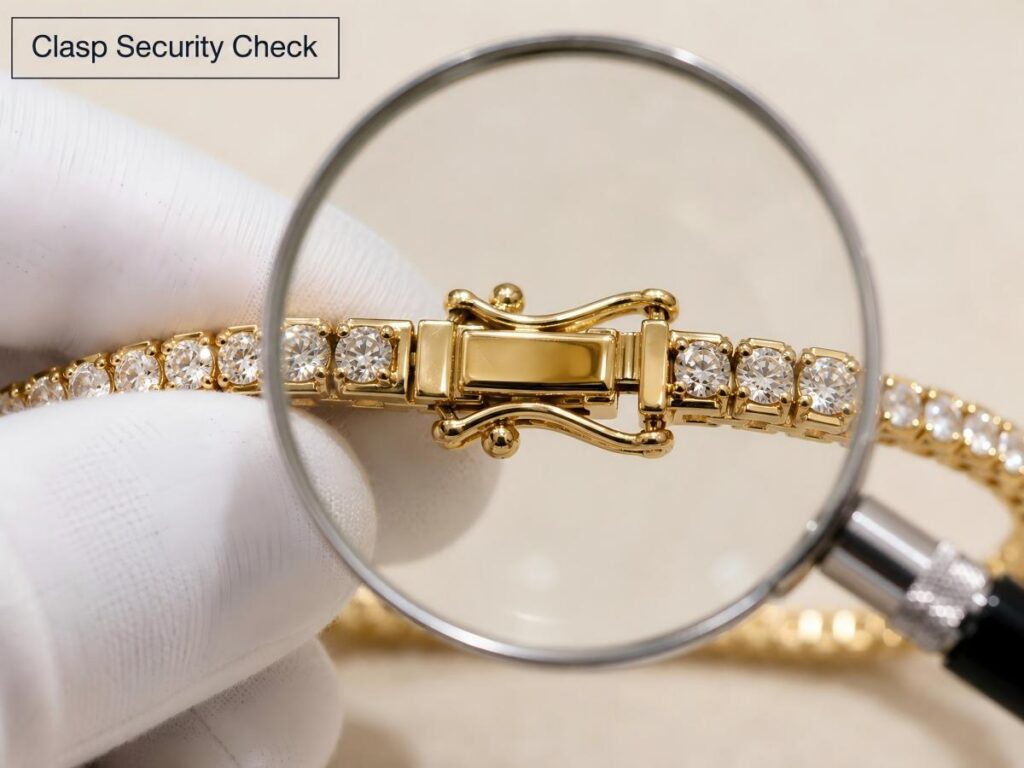
A good clasp should open and close smoothly, with clear tension and no unstable shaking.
Check Double Lock Box Clasp Details
If the bracelet uses a safety lock or double lock box clasp, the lock should align correctly and stay secure during wrist movement. Brands should open and close the clasp several times, gently pull the bracelet, and move it as if it were being worn.
The clasp should match the bracelet body in color, polish, and overall craftsmanship.
Review Bracelet Flexibility and Continuous Line
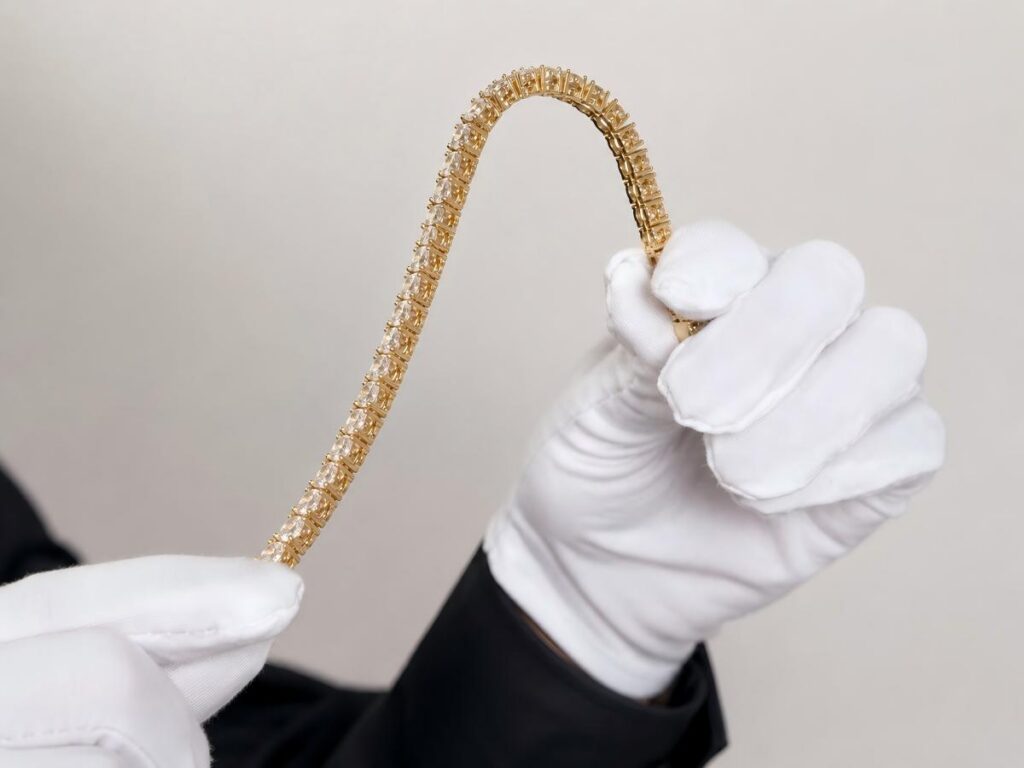
A tennis bracelet should move naturally around the wrist. Good craftsmanship should create a flexible strand with a clean continuous line.
When the bracelet curves, the stones should still look even and connected, without blocked links, awkward twisting, sharp link edges, uneven gaps, or uncomfortable pressure on the wrist.
Manufacturer Insight: Flat-Lay Photos Can Hide Flexibility Problems
Many buyers first check stone brightness, color, and flat-lay appearance. However, a tennis bracelet that looks good on a tray may still show problems when lifted or worn on the wrist.
In production, the most obvious issue is that some bracelets do not fall in a straight and natural line. They may twist, flip, feel stiff, or curve unevenly. With 15 years of tennis bracelet production experience, we pay special attention to link movement, bending angle, clasp balance, and wrist comfort. We also optimize the structure to reduce stiffness, blocking, and unnecessary flipping before bulk production.
Check the Bracelet Design for Everyday Wear
A tennis bracelet may look elegant enough for formal occasions, but it also needs to be practical for daily wear. The setting should not scratch the skin, the clasp should not feel bulky, and the bracelet should not pinch the wrist.
A lightweight bracelet may be better for everyday wear, while larger stones, colored gemstones, or a fancy bracelet design can create a stronger statement look.
Review Metal Type and Surface Finish
The metal finish is a key part of tennis bracelet quality control, whether the bracelet is designed in gold tone, silver tone, rose gold tone, white gold color, or platinum color.
Whether the bracelet uses brass, silver, stainless steel, or another base metal, the surface should look clean, smooth, and consistent.
Look for Scratches, Tarnish, and Plating Defects
Brands should look for scratches, dents, rough polishing, black marks, plating bubbles, uneven shine, tarnish marks, exposed base metal, glue marks, and polishing residue.
These defects may not always appear in product photos, but they can affect customer reviews after daily wear. A high-quality tennis bracelet should look clean when new and meet the expected durability standard for the brand’s market.
Confirm Size, Weight, and Specification Consistency
Bulk order quality is not only about whether each bracelet looks good. It is also about consistency. Before production, brands should confirm total bracelet length, bracelet width, stone size, stone shape, clasp type, metal color, weight range, logo position, packaging method, and acceptable tolerance range.
One detail brands should confirm is whether the clasp is included in the total bracelet length. If this is not clear, the final product may not match the expected wrist fit.
Match Bulk Production with the Approved Sample
Bulk production should match the approved sample in stone type, stone size, setting quality, bracelet length, width, clasp structure, metal color, surface finish, flexibility, logo details, packaging standard, and overall appearance.
If any change is needed during production, the supplier should confirm it with the brand before moving forward.
Test Durability Before Bulk Ordering
Durability does not come from one single factor. It depends on stone setting, metal structure, clasp design, surface finish, and production control.
Before approving bulk production, brands can open and close the clasp several times, gently bend the bracelet, check for scratches after handling, and review whether stones remain secure after light movement.
Final Pre-Shipment Inspection Before Delivery
Final inspection should happen before shipment, not after the brand receives the goods. This step helps catch visible defects, functional problems, quantity mistakes, and packaging issues before the order leaves the factory.
A practical final QC process should include appearance inspection, function testing, measurement checks, sample comparison, packaging review, and final cleaning.
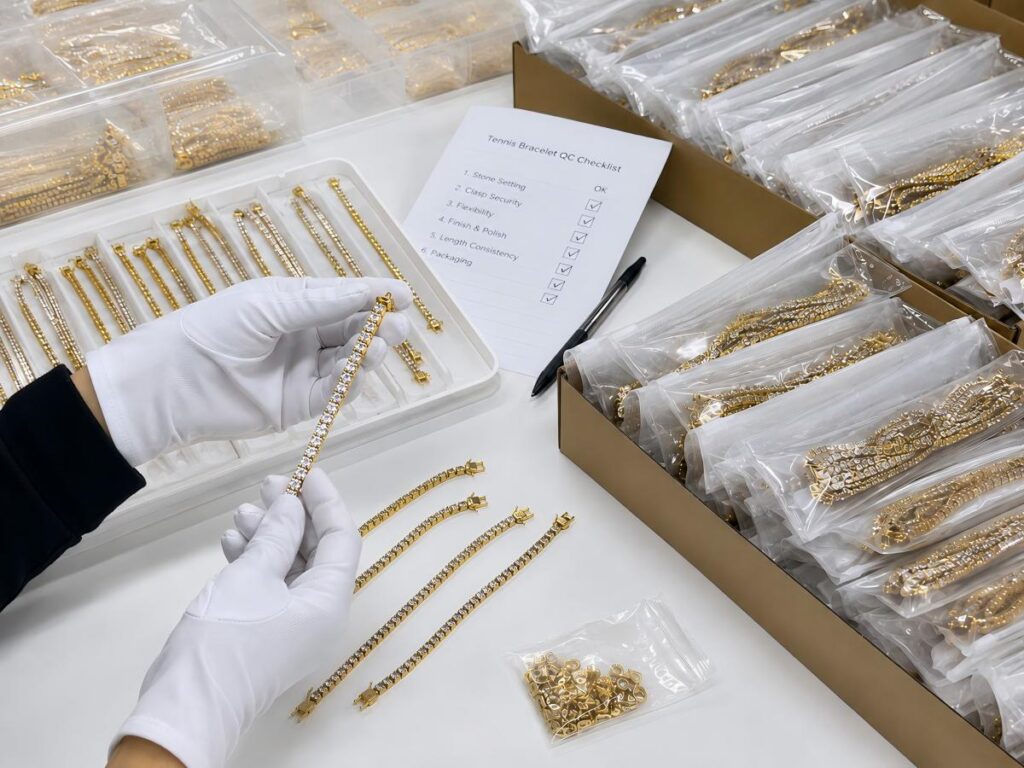
Tennis Bracelet QC Checklist
| QC Area | What Jewelry Brands Should Check |
|---|---|
| Stone Setting | Loose stones, missing stones, uneven alignment, sharp prongs |
| Stone Match | Shape, size, brightness, color, sparkle, shine |
| Clasp | Opening, closing, lock tension, safety lock, double lock box clasp |
| Flexibility | Smooth movement, flexible strand, no stiff sections |
| Surface Finish | Scratches, dents, polishing marks, tarnish, plating defects |
| Color | Consistent gold tone, silver tone, rose gold tone, or platinum color |
| Size | Bracelet length, width, stone size, wrist fit, tolerance |
| Sample Match | Bulk order matches the approved sample |
| Packaging | Correct box, bag, label, logo, and protection |
| Final Cleaning | No dust, residue, fingerprints, or loose particles |
Common Tennis Bracelet Defects Brands Should Avoid
When reviewing samples or bulk orders, brands should pay attention to defects that often lead to complaints or returns. The most common issues include loose stones, missing stones, uneven stone alignment, weak clasp tension, safety lock failure, stiff links, sharp edges, uneven plating, scratches, tarnish marks, color differences, inconsistent bracelet length, and poor packaging protection.
Work with a Manufacturer That Supports Sample Review
A reliable tennis bracelet manufacturer should not only provide product photos and prices. For jewelry brands, the more important question is whether the supplier can support sample review, specification confirmation, production consistency, and final inspection before shipment — the same key standards discussed in what jewelry brands look for in an OEM factory.
Before placing a bulk order, ask whether you can review a sample before mass production, what stone options are available, what stone setting will be used, how clasp security is checked, how bracelet flexibility is tested, how surface finish is inspected, how bulk consistency is controlled, and whether the final order will be inspected before shipment.
Review Tennis Bracelet Samples Before Bulk Production
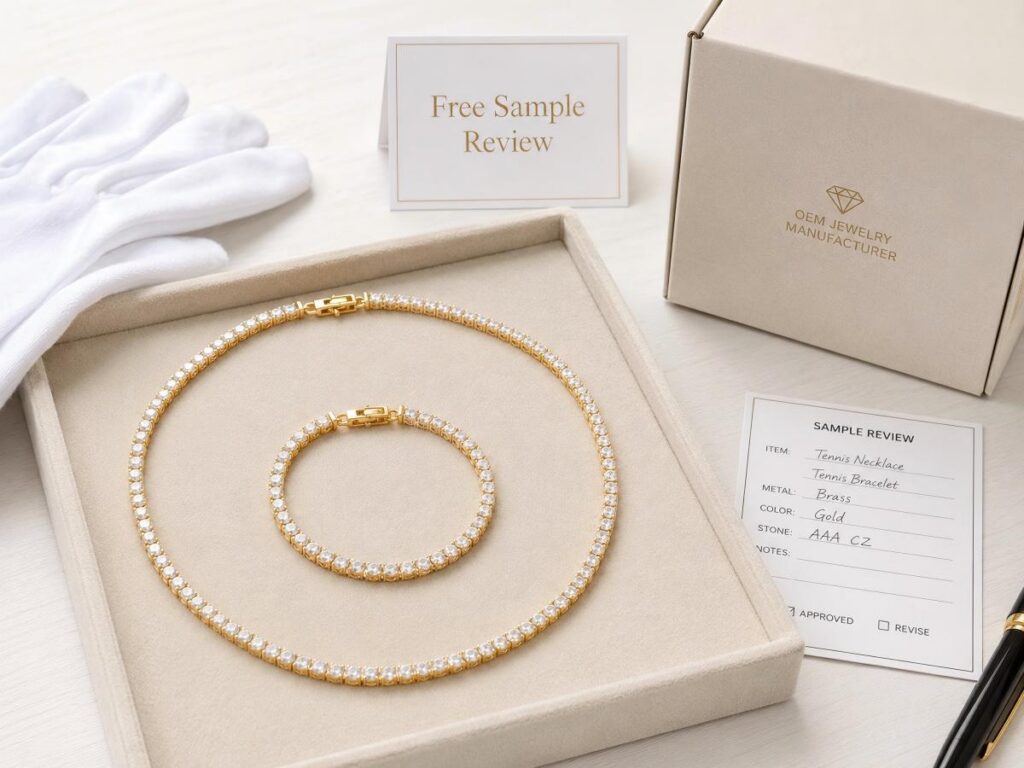
Before placing a bulk order, review real tennis bracelet samples first. This allows your brand to check stone setting, clasp security, bracelet flexibility, surface finish, size, packaging, and overall wearing comfort before mass production starts.
With long-term tennis bracelet production experience, we can help jewelry brands review sample details and confirm whether the structure is suitable for bulk ordering. Free samples can also be arranged for qualified projects, so brands can check the real quality before making a larger production decision.
FAQ About Tennis Bracelet Quality Control
Q1: How do you check the quality of a tennis bracelet?
Check the stone setting, clasp security, bracelet flexibility, surface finish, size, weight, and sample-to-bulk consistency. For jewelry brands, sample approval and final pre-shipment inspection are both important.
Q2: What should jewelry brands check before ordering tennis bracelets in bulk?
Brands should check the sample, stone setting, clasp function, bracelet flexibility, metal finish, plating color, size tolerance, packaging, and final QC process before placing a bulk order.
Q3: Why do tennis bracelet stones fall out?
Stones may fall out because of weak prongs, poor setting pressure, wrong stone size tolerance, rough production handling, or insufficient QC before shipment.
Q4: What stone options are common for fashion tennis jewelry?
Fashion tennis jewelry often uses 5A cubic zirconia or moissanite. These stones can offer bright sparkle and a clean look while keeping the collection more flexible for wholesale pricing.
Q5: Is diamond quality the same as tennis bracelet quality control?
No. Diamond quality usually refers to cut, clarity, color, carat weight, and certification. Tennis bracelet quality control is broader. It includes stone setting, clasp safety, bracelet flexibility, metal finish, durability, size consistency, packaging, and final inspection before shipment.
Q6: Do fashion tennis bracelets need the same inspection as diamond tennis bracelets?
They need a different inspection focus. Diamond tennis bracelets may require certification and diamond grading, while fashion tennis bracelets need stronger attention to secure settings, stone match, sparkle consistency, plating quality, scratches, tarnish resistance, clasp function, and bulk production consistency.
Conclusion
Tennis bracelet quality control is not only about checking whether the bracelet looks beautiful. For jewelry brands, the real focus should be stone security, clasp strength, bracelet flexibility, surface finish, durability, size consistency, and bulk production stability. Before placing a bulk order, review the sample carefully and confirm the quality standard with your manufacturer so future production and reorders have a clearer standard.