
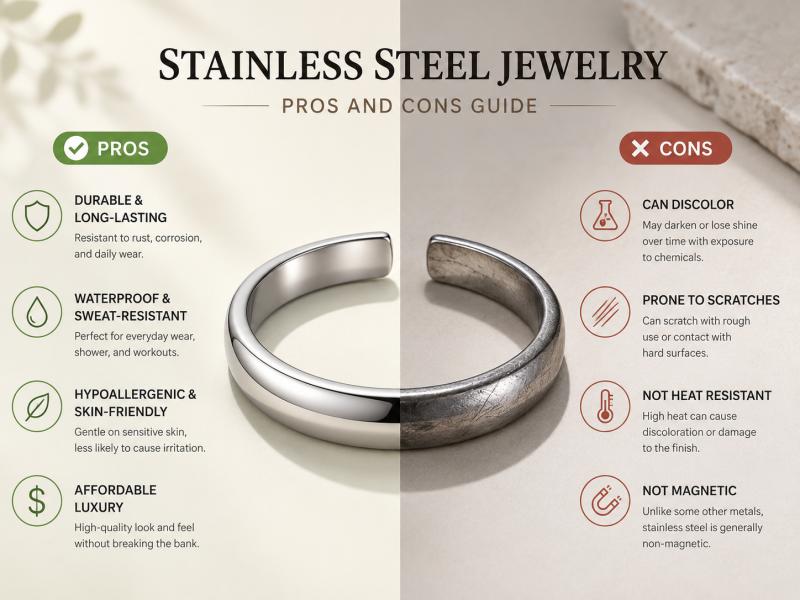
Stainless steel jewelry has become one of the most popular choices in modern fashion jewelry. From rings and necklaces to bracelets and earrings, more consumers are choosing stainless steel because it is durable, affordable, and easy to maintain.
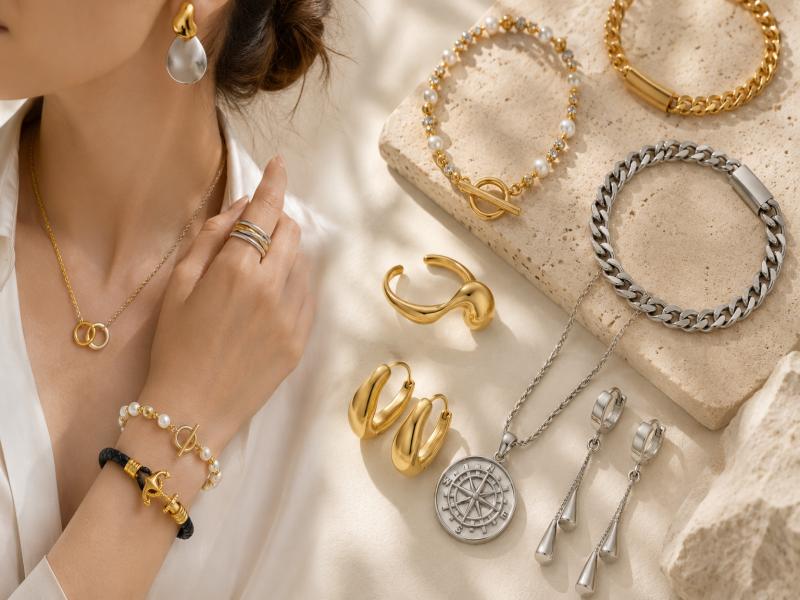
Many buyers still ask important questions before purchasing:
- Does stainless steel jewelry tarnish?
- Will stainless steel jewelry rust?
- Can stainless steel jewelry get wet?
- Is stainless steel jewelry waterproof?
- Is stainless steel jewelry hypoallergenic?
This guide explains the real pros and cons of stainless steel jewelry, how it compares with sterling silver and white gold, and whether it is a good choice for everyday wear.
Quick Overview of Stainless Steel Jewelry
Stainless steel jewelry is made from a steel alloy that contains chromium. The chromium creates a protective layer on the surface that helps resist rust, corrosion, and tarnish.
Most high-quality jewelry uses 316L stainless steel, often called surgical-grade stainless steel. This material is widely used for:
- Rings
- Necklaces
- Earrings
- Bracelets
- Men’s jewelry
- Waterproof jewelry collections
Compared with silver or brass jewelry, stainless steel pieces are usually stronger, more resistant to damage, and easier to maintain.
Today, waterproof stainless steel jewelry is especially popular because consumers want jewelry they can wear daily without worrying about fading or discoloration too quickly.
Pros of Stainless Steel Jewelry
One of the biggest reasons stainless steel jewelry continues growing in popularity is because it offers a strong balance between durability, affordability, and low maintenance.
Unlike many fashion jewelry materials, stainless steel performs well under daily wear conditions.
Excellent Durability for Daily Wear
Many buyers searching “how long does stainless steel jewelry last” are looking for jewelry that can survive daily use without becoming damaged quickly.
High-quality stainless steel jewelry can last for years with proper care. Compared with sterling silver, stainless steel is harder and more scratch resistant, making it a durable material for rings, necklaces, bracelets, and chains.
This makes stainless steel jewelry ideal for:
- Everyday wear
- Gym use
- Travel
- Men’s jewelry
- Waterproof jewelry
For consumers searching for the best jewelry metal for daily wear, stainless steel is often one of the most practical options.
Strong Resistance to Tarnish and Rust
One of the most common questions online is:
High-quality stainless steel jewelry rarely tarnishes because chromium creates a protective layer that helps prevent oxidation.
This means solid stainless steel usually performs much better than many low-cost fashion jewelry materials.
However, there is an important difference between:
- Solid stainless steel jewelry
- Gold plated stainless steel jewelry
Solid stainless steel typically keeps its appearance very well. Gold-plated versions may eventually fade depending on plating quality, friction, and chemical exposure.
Searches such as:
- does stainless steel jewelry tarnish
- will stainless steel jewelry tarnish
- does stainless steel jewelry rust
- will stainless steel jewelry rust in water
are increasingly common because buyers want jewelry that lasts longer and requires less maintenance.
For most people, genuine 316L stainless steel jewelry offers excellent resistance to rust, discoloration, and tarnish under normal daily conditions.
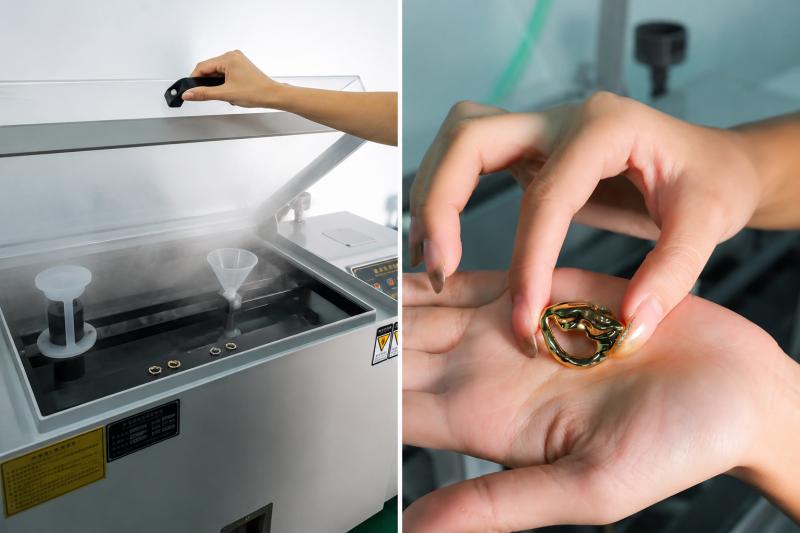
Factory Insight: How We Check Tarnish Resistance
In production, we do not judge stainless steel jewelry only by appearance. For waterproof and gold plated stainless steel jewelry, we often use salt spray testing to check surface stability. A common test condition is 5% salt spray at around 35°C for 48–120 hours. This helps us see whether the plating color, surface shine, and protective layer can remain stable before bulk production.
Waterproof and Easy to Wear Daily
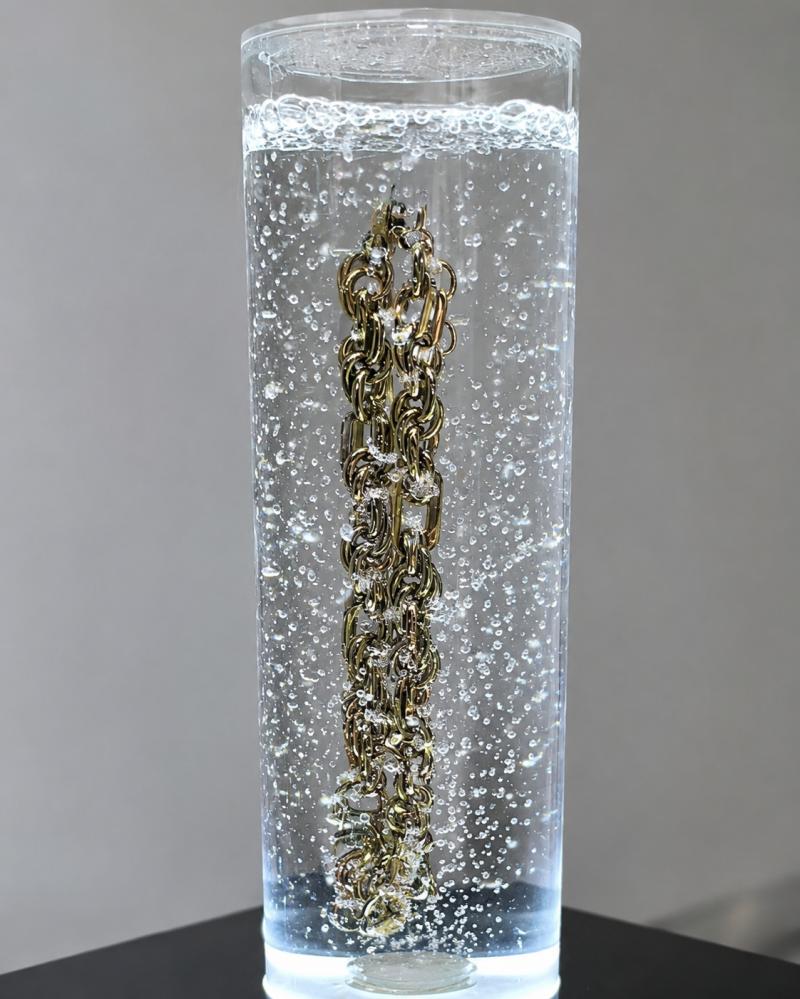
Many consumers today specifically search for jewelry they can wear in the shower, at the beach, or during workouts.
This is why keywords like these continue growing:
- can stainless steel jewelry get wet
- can you shower with stainless steel jewelry
- can you swim with stainless steel jewelry
- is stainless steel jewelry waterproof
Compared with silver or brass jewelry, stainless steel handles moisture much better. High-quality stainless steel necklaces and bracelets are commonly worn daily without major maintenance concerns.
However, “waterproof” does not mean completely indestructible. Long-term exposure to chlorine, bleach, or saltwater can still affect jewelry over time, especially plated pieces.
Hypoallergenic Properties for Sensitive Skin
Another reason stainless steel jewelry is popular is because it is generally hypoallergenic.
Many consumers with sensitive skin search for:
- is stainless steel jewelry hypoallergenic
- best jewelry for sensitive skin
- are stainless steel earrings hypoallergenic
316L stainless steel is widely used because it has lower nickel release than many cheap fashion metals.
For most people, high-quality surgical-grade stainless steel jewelry is comfortable for long-term wear and less likely to cause allergic reactions or skin irritation.
Affordable Modern Appearance
One major advantage of stainless steel jewelry is that it offers a clean, modern appearance without the high price of precious metals.
Polished stainless steel can resemble:
- White gold
- Platinum
- Rhodium finishes
This makes it attractive for consumers who want stylish jewelry at a more affordable price point.
Compared with sterling silver or gold jewelry, stainless steel is usually:
- More affordable
- More durable
- Easier to maintain
This balance between durability and value is one reason stainless steel jewelry continues becoming more popular worldwide. Minimal and clean stainless steel jewelry styles are especially popular for everyday wear and modern fashion trends.
Cons of Stainless Steel Jewelry
Although stainless steel jewelry has many advantages, it also has limitations buyers should understand before purchasing.
Ring Resizing Can Be Difficult
Because stainless steel is harder than silver or gold, resizing rings is more difficult.
This is important for online buyers because sizing mistakes may be harder to correct later.
Consumers purchasing stainless steel rings should always confirm sizes carefully before ordering.
Heavier Than Some Other Metals
Stainless steel jewelry is generally heavier than titanium or aluminum jewelry.
Some people enjoy the heavier premium feeling, especially in men’s jewelry. Others may prefer lighter materials for comfort.
This mostly depends on personal preference.
Deep Scratches Are Harder to Repair
Although stainless steel is resistant to scratches, deep scratches can still happen.
Once the surface becomes heavily damaged, restoring a perfect mirror shine may require professional polishing.
Gold-Plated Stainless Steel Can Fade
Many consumers search:
- does gold plated stainless steel tarnish
- does stainless steel gold tarnish
- how long does gold plated stainless steel last
The stainless steel base itself is highly durable, but the gold plating on top can eventually wear down depending on:
- Friction
- Sweat
- Daily wear
- Chemical exposure
- Plating thickness
Higher-quality PVD plating generally lasts much longer than cheap electroplating.
Intricate Designs Can Be More Difficult
Because stainless steel is a hard material, extremely intricate designs can sometimes be more difficult to produce compared with softer metals like sterling silver or brass.
Highly detailed handcrafted jewelry may still be easier to achieve in silver or other softer metals.
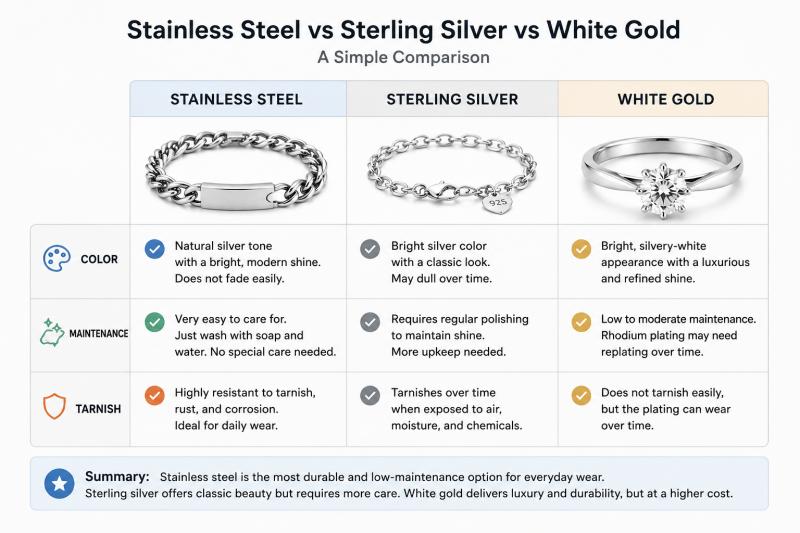
Stainless Steel vs Sterling Silver and White Gold
Consumers often compare stainless steel jewelry with sterling silver and white gold before purchasing.
| Material | Tarnish Resistance | Water Resistance | Maintenance | Best For |
| Stainless Steel | High | High | Low | Everyday wear |
| Sterling Silver | Low | Medium | High | Fine jewelry |
| White Gold | High | Medium | Medium | Luxury jewelry |
| Brass | Low | Low | Medium | Fashion jewelry |
Compared with sterling silver, stainless steel is generally:
- More durable
- More resistant to tarnish
- Easier to maintain
- More affordable
White gold may offer higher luxury value, but it usually requires more maintenance and higher long-term costs.
For consumers searching for jewelry that doesn’t tarnish easily, stainless steel is often one of the most practical options available.
Do Stainless Steel Rings and Necklaces Tarnish?
Another common concern is whether specific jewelry pieces tarnish differently.
Do Stainless Steel Necklaces Tarnish?
Necklaces usually experience less friction than rings. Because of this, stainless steel necklaces often maintain their appearance even longer.
This is why many buyers searching for a durable s.steel necklace choose stainless steel for everyday wear.
Do Stainless Steel Rings Tarnish?
Rings experience more contact with:
- Water
- Sweat
- Soap
- Hard surfaces
Because of this, rings usually wear faster than necklaces. However, solid stainless steel rings still perform much better than many fashion rings made from plated brass or low-quality alloys.
How to Choose High-Quality Stainless Steel Jewelry
Not all stainless steel jewelry performs the same.
The biggest differences usually come from:
- Stainless steel grade
- Polishing quality
- Plating method
- Plating thickness
- Quality control standards
For example, many premium jewelry manufacturers use 316L stainless steel because it offers better corrosion resistance and lower nickel release than lower-grade steel alloys. Working with an experienced stainless steel jewelry manufacturer can also help brands maintain better quality consistency across repeat orders.

For gold finishes, PVD plating is commonly preferred because it creates a more durable protective layer compared with traditional electroplating.
Consumers should also look for:
- Hypoallergenic claims
- Verified material information
- Durable plating methods
- Consistent polishing quality
Compared with cheap fashion jewelry, high-quality stainless steel jewelry is usually more resistant to tarnish, rust, scratches, and everyday wear.
| What to Check | Why It Matters |
| 316L stainless steel | Better corrosion resistance and lower nickel release |
| PVD/IP plating | More durable than cheap electroplating |
| Plating thickness | Affects how long gold color lasts |
| Polishing quality | Impacts shine and perceived value |
| Nickel-free test | Important for sensitive skin buyers |
Looking for High-Quality Stainless Steel Jewelry?
Whether you’re building a jewelry brand, sourcing new collections, or searching for durable everyday jewelry, stainless steel remains one of the best choices for long-lasting fashion jewelry.
At Nove Jewelry, we specialize in:
- 316L stainless steel jewelry
- Waterproof jewelry collections
- PVD gold plated stainless steel jewelry
- Men’s and women’s jewelry
- Rings, necklaces, bracelets, earrings, and chains
- OEM and private label jewelry manufacturing
Our collections are designed for better durability, daily wear performance, and long-lasting modern finishes.
Explore our stainless steel jewelry collections or contact us for wholesale and custom jewelry support.

How to Care for Stainless Steel Jewelry
Compared with silver jewelry, stainless steel is relatively low maintenance.
Most pieces can be cleaned easily using:
- Mild soap
- Warm water
- Soft microfiber cloth
A quick wipe after daily wear can help maintain shine and remove dirt buildup.
Although stainless steel is resistant to corrosion, it is still best to avoid unnecessary exposure to:
- Bleach
- Strong cleaning chemicals
- Chlorine for long periods
Proper care helps maintain appearance and extend the lifespan of plated finishes.
Frequently Asked Questions
Q1: Does stainless steel jewelry tarnish over time?
High-quality stainless steel jewelry rarely tarnishes under normal daily wear conditions. Most discoloration problems usually come from dirt buildup, harsh chemicals, or low-quality plating rather than the stainless steel itself.
Q2: Will stainless steel jewelry rust in water?
Genuine 316L stainless steel jewelry is highly resistant to rust and performs well in daily contact with water. However, long-term exposure to chlorine or saltwater may eventually affect plated finishes.
Q3: Can you shower with stainless steel jewelry?
Yes. Many people wear stainless steel jewelry while showering because the material handles moisture much better than many fashion jewelry metals.
Q4: Is stainless steel jewelry hypoallergenic?
Most high-quality 316L stainless steel jewelry is considered hypoallergenic and suitable for sensitive skin because it has lower nickel release than many cheap alloys.
Q5: Does gold plated stainless steel tarnish?
The stainless steel base itself is resistant to tarnish, but the gold plating may gradually fade depending on friction, sweat, and plating quality.
Q6: What jewelry metal lasts the longest?
For daily fashion jewelry, stainless steel is considered one of the most durable and low-maintenance materials available.
Q7: Is stainless steel jewelry worth buying?
Yes. Stainless steel jewelry offers an excellent combination of durability, affordability, modern appearance, and resistance to tarnish and rust.
Final Verdict
Stainless steel jewelry offers one of the best combinations of durability, affordability, and low maintenance in modern jewelry.
It is especially suitable for consumers looking for:
- Waterproof jewelry
- Durable everyday jewelry
- Affordable fashion jewelry
- Long-lasting necklaces and rings
- Modern men’s jewelry
Although stainless steel may not fully replace luxury precious metals like white gold or platinum, it remains one of the smartest choices for practical daily wear.
For buyers who want jewelry that is stylish, durable, resistant to tarnish, and easy to maintain, high-quality stainless steel jewelry is an excellent option.