
Introduction
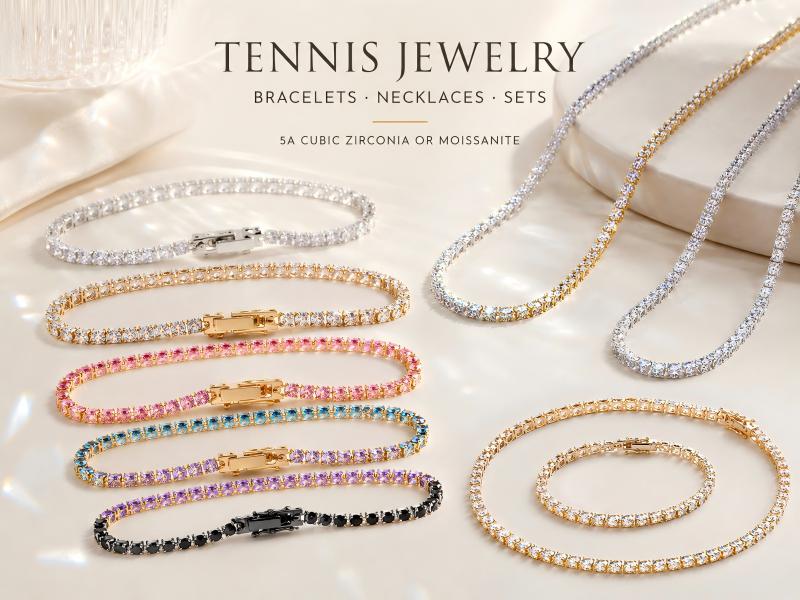
Tennis jewelry is built around a continuous line of individually set stones, creating balanced sparkle. The tennis bracelet is the best-known piece, while necklaces and matching sets extend the same timeless design into a full collection.
For jewelry brands, it is versatile enough for everyday wear and special occasions.
What Is Tennis Jewelry?
Tennis jewelry refers to bracelets, necklaces and coordinated pieces featuring a continuous or closely aligned row of stones. Its appeal comes from symmetry, brilliance and smooth movement rather than one central pendant.
The style is defined by structure, not by diamonds or one specific metal. A modern collection can use 5A cubic zirconia, moissanite or colored gemstones.
What Is a Tennis Bracelet?
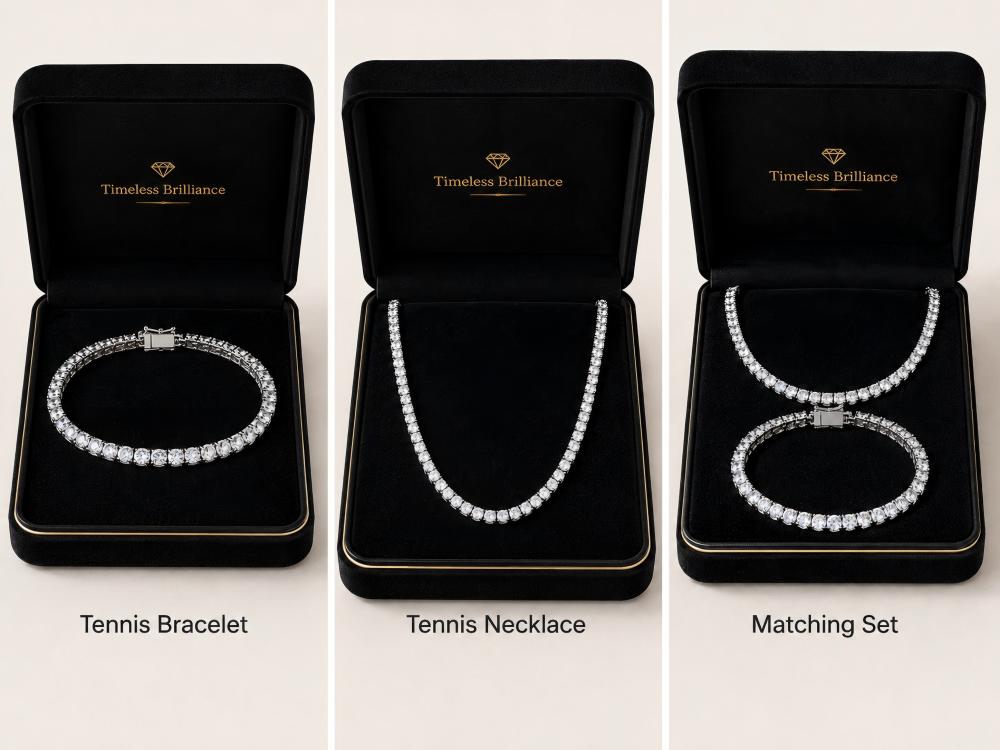
A tennis bracelet is a flexible bracelet formed by individually linked stone settings around the wrist. The links move naturally while keeping the stones in a continuous line.
It remains a popular choice because it can be worn alone, paired with a watch or matched with a necklace.
Why Is It Called a Tennis Bracelet?
Earlier versions were commonly known as line bracelets. The name changed after tennis player Chris Evert lost her bracelet during a televised U.S. Open match in 1978. Play stopped while it was recovered, and the moment made “tennis bracelet” widely recognized.
The story also gives a practical lesson: secure clasps matter for regular wear.
Do Tennis Bracelets Have to Use Diamonds?
No. Traditional fine jewelry often features a diamond tennis bracelet in precious metals such as yellow gold, white gold, rose gold or platinum. In that market, diamond quality and total carat weight may affect value.
Tennis jewelry for fashion brands does not need to follow that model. Our pieces focus on 5A cubic zirconia or moissanite for bright, consistent sparkle without presenting them as diamond bracelets.
Manufacturer Insight: Why Stone Quality Matters More in Tennis Bracelets
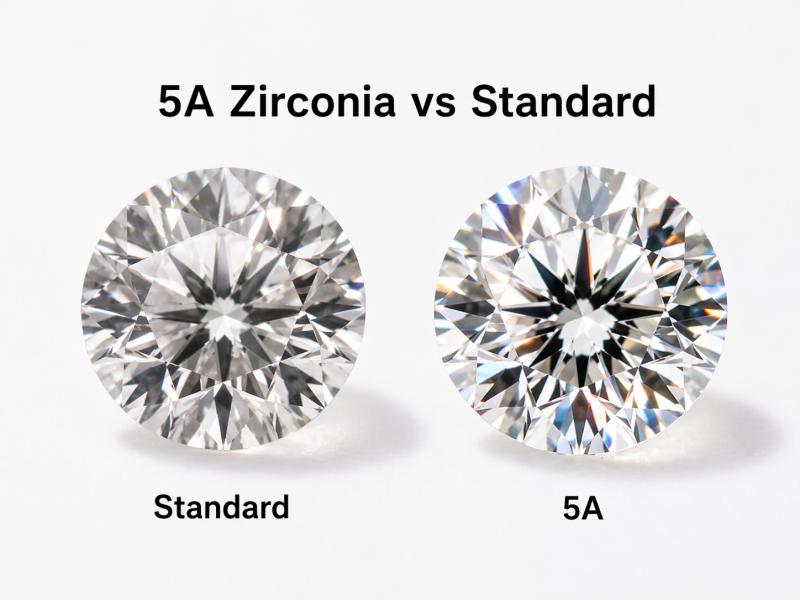
On a design with only one or two small stones, the visual difference between lower-grade and 5A cubic zirconia may not always be obvious at first glance. A tennis bracelet is different: nearly the entire visible surface is formed by a row of stones. If some stones appear grey, dull or inconsistent in tone, the full bracelet can look uneven, with alternating bright and dark points instead of one continuous line of brilliance.
This is why we use 5A-grade cubic zirconia only for CZ tennis jewelry. The goal is not simply to add stones to a bracelet, but to create a consistent ribbon of light that continues to sparkle as the hand moves, even under softer indoor lighting. Customers can still choose moissanite if that better matches their collection direction.
Tennis Bracelet Styles and Settings
A classic design uses one row of evenly sized stones. Slim styles give subtle sparkle, while wider pieces create a bolder overall look. Modern designs may also use colored gems.
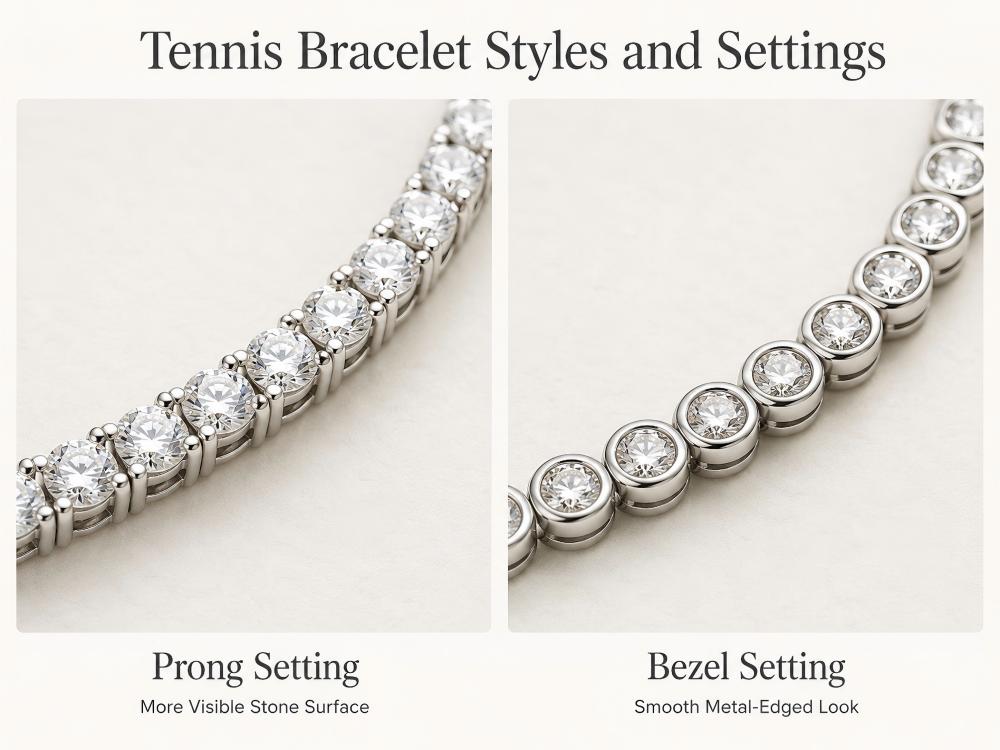
Prong settings allow more light entry and visible brilliance. Bezel settings surround each stone with metal for a sleek, protected appearance. Whatever the setting, consistent alignment is essential.
What Is a Tennis Necklace?
A tennis necklace places the same continuous stone-set style around the neckline. It can be an elegant standalone piece or the most visible item in a collection.
When developed with a bracelet, the necklace should match its stone scale, finish direction and design character.
What Is a Tennis Jewelry Set?
A tennis jewelry set usually combines a bracelet and necklace, sometimes with coordinating earrings. The pieces should share related width, sparkle and finish.
For brands, a set supports gifting, bundles and stronger campaign presentation.
How Should a Tennis Bracelet Fit?
A tennis bracelet should sit close to the wrist and fit comfortably. A practical guide is enough room to slide one finger between the bracelet and wrist.
If it is too loose, it may turn or catch. If it is too tight, comfort and movement are reduced.
How to Open and Secure a Tennis Bracelet
Many tennis bracelets feature a box clasp with a side release and safety catch. To open a tennis bracelet, release the safety catch first, then press the release gently rather than pulling the links.
Before approving a sample, brands should confirm that the clasp closes smoothly and remains secure during normal wear.
Caring for Tennis Bracelets and Necklaces
Regular cleaning helps maintain sparkle. Clean the piece gently with mild soap, lukewarm water and a soft cloth or soft brush, then dry it carefully.
Store pieces separately and avoid rough activity or heavy impact that could affect the stones or clasp.
Styling Tennis Jewelry
A tennis bracelet can be worn for any occasion: alone for a classic design, stacked with other bracelets, or paired with a matching necklace for an elegant set.
This versatility supports everyday collections, gift edits and occasion-focused launches.
What Should Jewelry Brands Check Before Development?
Check the sample for a continuous line of stones, smooth flexibility, comfortable fit and secure clasp performance. A necklace should rest naturally without frequent flipping.
For a matching set, compare both pieces together. Their proportions, sparkle, metal finish and overall look should create a perfect match before production.
Manufacturer Insight: A Bracelet Can Look Fine Flat but Fail on the Wrist
In real sample evaluation, a tennis bracelet may look perfectly acceptable when laid flat on a table, yet reveal problems once it is worn or lifted by hand. Poor spacing or an unsuitable link structure can pinch arm hair. A bracelet may also appear neat when flat but feel stiff on the wrist because it does not follow the natural curve comfortably. In other cases, the piece looks normal in a flat photo but does not hang in a clean, straight line when picked up.
Clasp performance is another issue that may not appear in a first photo. Some clasp structures become loose after being opened and closed repeatedly. Based on 15 years of tennis bracelet production experience, our long-term production staff pay close attention to flexibility, straightness, anti-pinching structure and clasp security during sample checking. Brands can request a free sample to review these quality details in hand before moving forward.

Check Tennis Jewelry Quality Before Production
A tennis bracelet should be evaluated in hand, not only from product photos. Check how it follows the wrist, whether the stone line stays straight, whether the structure avoids pinching, and whether the clasp remains secure after repeated use.
For your collection, you can choose 5A cubic zirconia or moissanite according to your product direction. Request a free sample to review the sparkle, flexibility, clasp security and overall wearing quality before moving into production.
Frequently Asked Questions
Q1: Is Tennis Jewelry Only Made With Diamonds?
No. Tennis jewelry may use diamonds, 5A cubic zirconia, moissanite or other gemstones. Its defining feature is the continuous stone-set appearance.
Q2: What Makes a Quality Tennis Bracelet?
A quality tennis bracelet combines aligned stones, flexible movement, comfortable fit and a secure clasp.
Q3: Can Tennis Jewelry Be Worn Regularly?
Yes, with proper care. Secure closures, gentle cleaning and avoiding heavy impact help maintain its appearance.
Conclusion
Tennis jewelry combines continuous sparkle with a classic, versatile design. For jewelry brands, tennis bracelets, necklaces and matching sets offer a clear collection direction built around appearance, comfort and dependable construction.
Planning a tennis jewelry collection? Explore coordinated pieces developed with 5A cubic zirconia or moissanite and careful sample evaluation.